• Home
  • About
  • Contact
  • Blog
Menu

Andrew Merle

Performance • Lifelong Athleticism • Health • Living Well
  • Home
  • About
  • Contact
  • Blog

Credit: Green Chameleon / Unsplash

The Power of 3 Uninterrupted Hours

February 25, 2018

When I feel overwhelmed with everything I need to get done, I remind myself of the power of three uninterrupted hours.

I am always less stressed when I have time alone to work and think — and I have learned that three focused hours drastically improves my mood.

This is true whether it is hundreds of emails that have piled up, or a big new project that needs to get started.

The scariest part for me is actually thinking about the volume of work before I’ve started, because it seems as though I won’t have enough time to get it all done. But once I actually dig in, it’s never as bad as I feared.

One hour is not enough to put a real dent in the work — It usually takes a little while for me to get into the task, especially if it’s a creative project. After two hours, productivity is often flowing, but stopping at that point would halt the momentum.

Three hours is the sweet spot for me to make significant progress and to create peace of mind.

I didn’t initially realize how important a three-hour block was — but after referencing the clock, I noticed a consistent pattern of being ready to stop at that point. And I recognized that the stress had melted away.

The key is ensuring the three hours are free of disruptions. This means locking myself away in a quiet area at work, or going to a coffee shop where nobody will bother me. I make sure to put my phone away to avoid unwanted interruptions. This type of atmosphere enables deep work — the ability to focus without distraction on a cognitively demanding task.

Now that I know how critical three consecutive hours are for my productivity and well-being, it is up to me to create that time. That often means blocking my calendar from calls or meetings, or postponing social commitments. After I have reduced my workload and stress levels, I am better able to truly be present with others.

If three hours seems like a lot, I remind myself that I’m awake for at least 16 hours each day. Spending less than 1/5 of that time making progress against my most important tasks is well worth it.

Maybe the power of three uninterrupted hours will work for you as well.

The next time you’re feeling overwhelmed, try devoting three straight hours to the work that is stressing you out most.

If you’re like me, you’ll emerge feeling clear-headed and accomplished. It’s amazing what three focused hours can do.

How To Cash In On The Untapped Longevity Economy

February 18, 2018

Calling all entrepreneurs.

Want to know an untapped Blue Ocean opportunity?

There is a huge group of people out there — a population with tremendous wealth and purchasing power — whose needs are not being met.

This represents a massive, largely unexplored, business opportunity for anyone who is willing to understand the group’s desires and build products and services around them.

This poorly-served population is older adults — specifically people over 50 years of age. The 50+ crowd holds the keys to the emerging longevity economy.

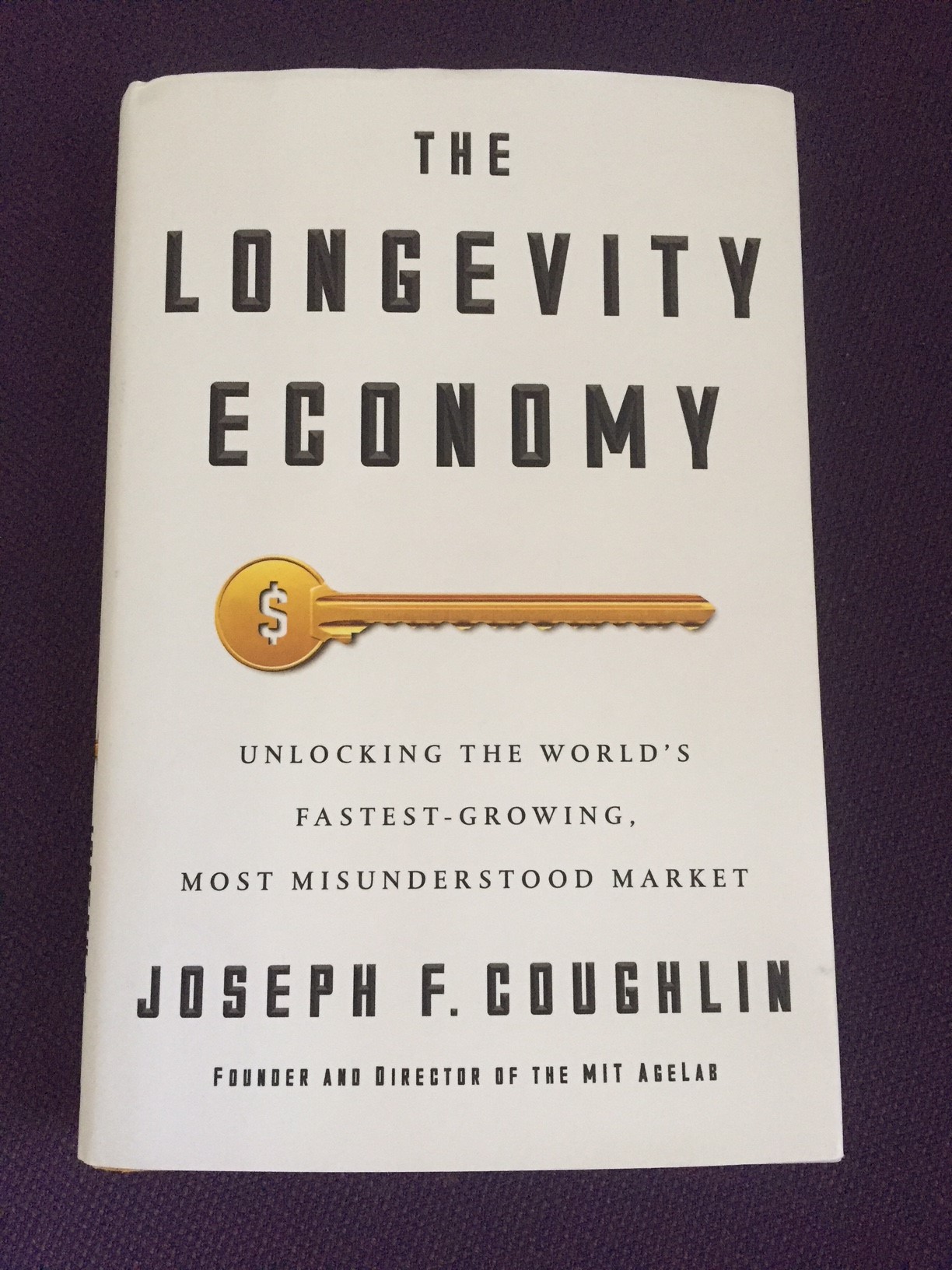
Consider these stats from the eye-opening book The Longevity Economy by Joseph F. Coughlin:

The Longevity Economy by Joseph F. Coughlin

  • 50+ consumers control 83% of household wealth and are worth about $8 trillion in the United States alone
  • Less than 15% of companies have established any sort of business strategy focused on older adults
  • Less than 10% of marketing dollars are aimed at the 50+ population
  • Advertisers spend 500% more on millennials than all other age groups combined

Do you want to fight with every other company to win the 18–34 crowd — a group with minimal free time and disposable income — or do you want to meet the needs of the most affluent population (in terms of both time and money)?

If you want to capitalize on the longevity economy, you need to really understand its people, and why they are not currently being served properly.

Most businesses targeting older adults focus only on a small number of basic needs — specifically health, safety, and finances. Yes, there are many health care, pharmaceutical, and financial companies servicing older adults, but the 50+ population wants much more than just to protect their money and stay alive.

Don’t just take my word for it.

Joseph Coughlin is arguably the world’s leading expert on the older population. He is the founder and director of the MIT AgeLab, a multidisciplinary research program created to understand the behavior of the 50+ population, the role of technology and design in their lives, and the opportunity for innovation to improve the quality of life for older adults and their families.

Coughlin asserts that the 50+ crowd desires much more than just health and safety. In fact, only 35% of people over 75 report feeling “old.”

What they really want is to chase their dreams, have fun, contribute, socialize, achieve meaning, and leave a legacy.

In short, older adults want to have a life, not just stay alive.

Unfortunately their higher-level desires are not being satisfied. Many older adults find themselves retired and socially isolated. Coughlin says that “potential routes to happiness and meaning, including work, professional ambition, climbing the social ladder, education, athletic achievement, leaving a legacy — even sex — are closed off.”

So how can you best target this important population?

First, you need to understand that 50+ adults are comfortable with technology. They have used computers and cell phones for much of their adult life, and understand the benefit technology provides. As Coughlin says, “Tomorrow’s most successful products for the older consumer will feature high technology or else will embrace a consumer for whom tech is an important part of life.”

Additionally, not all older consumers are of equal importance for businesses. Coughlin is confident that women hold the most power in the longevity economy. Women outnumber men, they are leading the charge for a more fulfilled older life, and women control the overwhelming majority of purchasing decisions among the older population. In fact, women influence 64% of consumer purchases worldwide among all age groups! Coughlin says it well: “The future will be grey, female, and proud of it.”

And don’t think that your offering needs to be a material thing. Many older adults have accumulated wealth and material possessions over the years, but they seeking something else as they age. According to Coughlin, this group “simply must have meaning in their lives — and will pay for products that deliver it. This drive — and the closely related desire to leave behind a positive legacy — constitutes perhaps the single greatest unexplored area on the frontier of the longevity economy.”

One way to provide meaning for older adults is through work and mentorship. If you want to be successful in the longevity economy, you should recognize that older adults still want to be productive — using their experience and resources to give back. “Of all the aspirations that older adults will tackle head-on in the near future, the one that will affect all business sectors, not just older-consumer-facing companies, is the widespread desire for meaningful work in one’s ‘retirement years',” says Coughlin.

And of course don’t forget that older adults still want to laugh and enjoy time with their friends and family. They want to double-down on time spent with loved ones. If you can facilitate meaningful experiences and human connection, you will be well-positioned in the longevity economy.

To sum it all up: Embrace technology, focus on women, and deliver socialization, meaning, and an enhanced legacy.

If you do that, you will be creating a better tomorrow for older adults and changing the narrative of old age. And you won’t only be improving their lives.

As Coughlin says, “The legacy you create may well be your own.”


Comment

Credit: Allesio Lin/Unsplash

Money Doesn't Make You Happy, But This Does

February 11, 2018

Ray Dalio is worth over $17 billion dollars. 

He is one of the 100 wealthiest people in the world, and built his investment company, Bridgewater Associates, into the world’s biggest hedge fund. 

If anybody knows about the power and importance of money, it’s Dalio.  He has more of it than nearly everybody else on the planet. 

And yet even Dalio says that money does not buy happiness. 

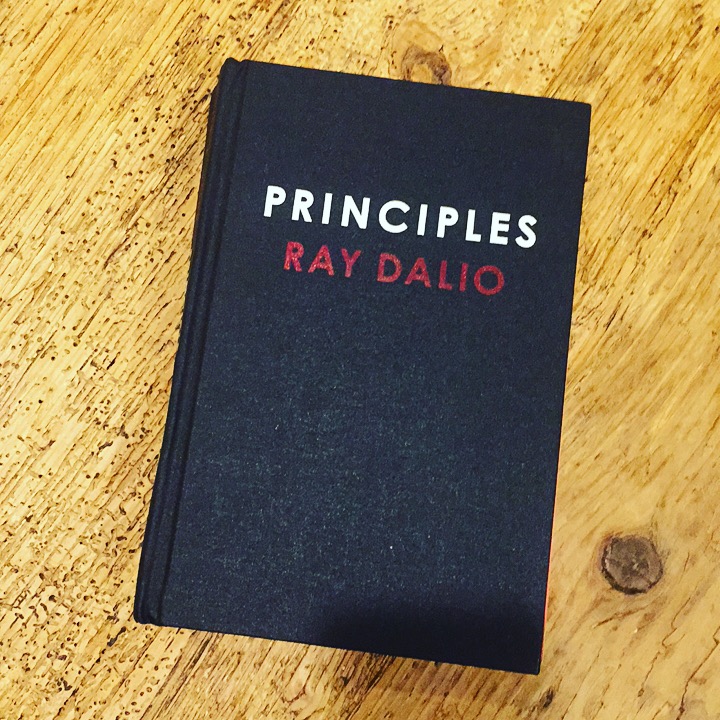
Dalio is clear about this point in his new book Principles, saying, “Having spent time with some of the richest, most powerful, most admired people in the world, as well as some of the poorest, most disadvantaged people in the most obscure corners of the globe, I can assure you that, beyond a basic level, there is no correlation between happiness levels and conventional markers of success.”

In fact, he says that “even the richest people feel short of the money they need to do the things they want to do.”

The reality is that chasing money is an unfulfilling end goal, and it has no finish line. 

It would be one thing to hear that from someone who doesn’t have much, but when someone in Dalio’s position says it, we should listen. 

If money does not create happiness, then what does? 

 “The happiest people discover their own nature and match their life to it,” according to Dalio. 

For him, the goal was never about making money.  “Meaningful work and meaningful relationships were and still are my primary goals and everything I did was for them,” he says.  “Making money was an incidental consequence of that.” 

His definition of meaningful work is being on a mission he becomes engrossed in, and meaningful relationships are those he has with people he cares deeply about and who care deeply about him. 

That it’s – meaningful work and meaningful relationships are all he’s ever chased.  Or, to put it more simply, if you would have asked him what his objective was when he started out, he would have said, “To have fun working with people I like.”  And of course he loves playing the markets – something he’s done since he was 12 years old and will keep doing until he dies. 

Ray Dalio's bestselling new book, Principles

Ultimately, life and happiness boils down to finding the right fit for you. 

It is essential to know your own nature and operate consistently with it.  And that should feel freeing, not limiting.    

According to Dalio, “Whatever your nature is, there are many paths that will suit you, so don’t fixate on just one.  Should a particular path close, all you have to do is find another good one consistent with what you’re like.”

You might know in your heart what that looks like for you, but if not, you can gain some self-awareness by taking the personality and workplace assessments that Bridgewater administers to all of its employees, including:

  • Myers-Briggs Type Indicator (MBTI)

  • Workplace Personality Inventory

  • Team Dimensions Profile

  • Stratified Systems Theory

I also recommend the HIGH5 Test, StrengthsFinder assessment, and the VIA Character Strengths survey to learn more about your unique strengths and interests. 

Knowing more about yourself will enable you to choose fit over money. 

The number one regret of the dying is “I wish I’d had the courage to live a life true to myself, not the life others expected of me.”

Money won’t mean much if you aren’t living a life that is in line with what you want.  And making money in a way that conflicts with your personality or values will just make you feel trapped.

To live a truly fulfilling and happy life, Dalio says what you really need is “the courage to be true to your truest self, no matter what other people want you to be.”

Credit: Ian Schneider 

Why You Should Have Friends

February 3, 2018

Social connection is the greatest predictor of happiness.

That is what happiness expert Shawn Achor has found after more than a dozen years studying the topic.

Social relationships are also vital to physical health. Human-behavior researcher and #1 New York Times best-selling author Tom Rath has found that social relationships help reduce stress and the risk of age-related memory loss. On the other hand, people with limited social interactions have almost twice the risk of dying from heart disease and are twice as likely to catch a cold.

Close relationships at work also lead to spikes in productivity. According to Rath, employees who have a best friend at work “are seven times as likely to be engaged in their jobs, are better at engaging customers, produce higher quality work, have higher wellbeing, and are less likely to get injured on the job.”

Therefore, focusing on your relationships proves to be good for your career as well. Achor’s research has revealed that happiness causes success, not the other way around.

Happiness. Health. Productivity. Success. All of this can be achieved through social relationships.

But how much social interaction we should aim for in order to see these benefits?

Credit: Arthur Poulin

According to Rath, the ideal amount is six hours of daily social interaction in order to have a great day. That might seem like a lot, but he also says that every hour of social time helps to reduce your chance of having a bad day. A little is good, a lot is better.

Perhaps this level of social connection is already a core part of your life if you are naturally outgoing and extroverted.

But what about if you are more of an introvert?

Achor recommends the simple act of sending a quick email every morning to thank or praise someone you know as a powerful way to boost your social connection and happiness. He says the effects of practicing this habit for 21 days in a row are profound.

Here are some more strategies to keep in mind as you get going, from Psychology Today’s 7 habits of socially connected people:

  • Focus on quality relationships over quantity
  • Prioritize face-to-face interactions over digital or phone
  • Be willing to share personal information with others and make yourself a little vulnerable
  • Ask questions and focus on listening to others
  • Don’t let minor personal differences get in the way of building relationships
  • March bravely into relationships without worrying about rejection

Relationships with other people are arguably the most important thing in our lives. And in addition to all of the benefits mentioned above, relationships are fun.

So give yourself permission to get out there and have some fun with someone else.

It just might be the best use of your time.

Tags happiness, health, productivity, success

Credit: Carly Jayne/Unsplash

This Is How Much Water You Should Really Be Drinking

January 22, 2018

Water is the number one healthiest beverage to drink.

That is the (perhaps unsurprising) finding from The Beverage Guidance Panel, a group of five of the world’s foremost nutrition experts.

The panel did extensive research on the health benefits and costs of each beverage, and ranked them on a six-tier scale from best to worst.

Water emerged as the clear winner.

But how much water should we drink?

You have undoubtedly heard the popular recommendation to drink eight glasses of water a day, but that guidance is based on little scientific evidence. The eight-glasses-a-day prescription traces back to a 1921 paper, based on just one person’s urine and sweat analysis.

So what are more broadly-applicable guidelines for water intake?

After reviewing all of the best evidence to date, authorities from Europe, the U.S. Institute of Medicine, and the World Health Organization recommend 8–11 cups of water per day for women and 10–15 cups a day for men.

However, this guidance includes water from all sources, including food and water produced naturally by the body. Those sources account for about 4 cups of water per day, and therefore the daily recommended water consumption becomes 4–7 cups for women and 6–11 cups for men.

Complicating things further, we also get water from other beverages, and certain drinks can actually increase the water in your body (even surprising ones like coffee, tea, and beer), whereas others actively dehydrate you (wine).

Accounting for all of these variables, what should we do?

Dr. Michael Greger, New York Times bestselling author of How Not To Die and founder of NutritionFacts.org, has the answer.

He says, “Unless you have a condition like heart or kidney failure or your physician advises you to restrict your fluid intake, I recommend you drink five glasses of tap water a day.” One glass equals 12 ounces, so that translates to 60 ounces of water consumption per day.

Dr. Greger prefers tap water because it may have less microbial and chemical contamination than bottled water, and has less environmental and economic impact.

Why is water so beneficial anyway?

In his book, Dr. Greger cites studies showing that drinking water (at the levels he recommends) significantly reduces the risk of dying from heart disease, protects against certain cancers, increases brain functioning, and improves mood (whereas water restriction can cause the opposite effects).

If you find it challenging to drink five 12 oz. glasses of water per day, try spicing it up a bit.

Dr. Greger recommends adding fresh fruit (like strawberries or blackberries), veggies, and other enhancements (cucumber slices, mint leaves, sage, basil, cinnamon sticks, ginger shavings). He also points out that drinking carbonated water may help alleviate gastrointestinal symptoms.

Credit: Kaizen Nguyen/Unsplash

For even more nutritional bang for your buck, try adding coffee beans or tea leaves to your water. Coffee and tea are tied as the number-two healthiest beverages, so adding them to your water provides additional nutrients without caloric expense (a cup of black coffee or tea only has two calories).

Summing it all up, Dr. Greger says it best: “Drink five glasses of water a day, be they plain tap water or flavored with fruit, tea leaves, or herbs. Keeping hydrated may elevate your mood (and vigor!), improve your thinking, and even help cut your risk for heart disease, bladder cancer, and other diseases. Bottoms up!”

The Ultimate Human Diet

January 15, 2018

What if the food we eat could not only nourish our bodies, but also reverse climate change and ultimately save the world?

Is it possible that this perfect human diet exists?

Josh Tickell — one of the leading experts in the fields of health, climate and alternative energy — says yes.

He details this optimal diet in his new book Kiss the Ground (which is soon to be a full-length documentary executive produced by Leonardo DiCaprio and narrated by Woody Harrelson).

Tickell says that the food we eat has the ability to improve our health while simultaneously regenerating the soil and helping to reverse global warming.

The diet primarily follows the guidelines set forth in the Harvard Healthy Eating Plate (the official dietary advice from Harvard doctors and medical professors), specifically:

Ensure at least 1/2 of your meal is vegetables and fruit

Aim for color and variety. Potatoes don’t count because of their impact on blood sugar. The average American currently only gets about 12% of his or her calories from from vegetables, and most of that is from potatoes.

Make whole grains 1/4 of your plate

Whole grains — including whole wheat, barley, wheat berries, quinoa, oats, brown rice, and whole wheat bread and pasta — have a milder effect on blood sugar than white bread, white rice, and other refined grains.

Make protein 1/4 of your plate

Fish, chicken, beans, and nuts are all good options. Limit red meat, and stay away from processed meats such as bacon, sausage, and cold cuts.

Eat healthy plant oils in moderation

Choose healthy oils such as olive, canola, soy, corn, sunflower, and peanut, and stay away from partially hydrogenated oils which contain unhealthy trans fat.

Drink water, coffee, or tea

Avoid sugary drinks and limit milk/dairy (1–2 servings per day) and juice (1 small glass per day).

Consider dietary supplements

There are dietary supplements that you can take in order to benefit your body and overall health. It can help improve your mental well-being too. Some are more psychedelic than others and it’s worth doing some research like, do mushroom gummies make you trip? Consider the benefits of them and determine for yourself if they’re worth trying.

...

Tickell says this spells out the basic portions of the healthiest diet, but it is missing one key component to set off a chain reaction of building the soil and sequestering carbon dioxide in the ground.

He says this is the one missing line of text:

“Do your best, your very best, to make sure the items on the plate are sourced from certified organic, or better yet, regenerative organic farmers.”

A regenerative diet is the ultimate human diet.

A regenerative diet heals both our bodies and the planet.

Food that is grown in a regenerative way builds soil fertility. It naturally increases carbon, nitrogen, and water in the soil while simultaneously producing copious amounts of nutrient-dense food, by adhering to the following farming principles:

  • Use the least amount of mechanical disturbance to the soil as possible, including no (or minimal) tillage.

  • Cover the soil with a living plant at all times.

  • Rotate crops.

  • Avoid all sprays.

  • Ensure crop diversity.

  • Ensure animals are raised humanely, on pasture.

  • Intelligently manage and integrate cows on the land - Manure is credited as the “secret sauce” when it comes to building soil on a large scale. We need cows and their manure to make enough compost to stabilize the soil.

This is all in stark contrast to much of our modern, industrialized, monocrop-based agriculture, which depletes both the soil and the nutrients we need.

Ultimately, soil health is the critical piece in order to grow our food in the quantities needed to sustain humanity, and to sequester much of the carbon dioxide that we have emitted into the atmosphere.

“Every single thing you put in your mouth (that is food) needs soil,” says Tickell. “It is quite simply the basis for all aboveground life on our planet.”

Therefore it is essential that we nourish the soil, and Tickell says our daily food choices have more power to yield this result than anything else we do.

The food choices of 98% of the population (the eaters) dictate what the other 2% (the farmers) grows.

Therefore, by committing to a regenerative diet — combining the Harvard Healthy Eating Plate with products that have been grown in a regenerative way — we, the eaters, have the power to change the food system in a way that improves our bodies and our Earth.

How to Maximize Small Pockets of Time

December 29, 2017

People often complain about having too much to do, and too little time. And in our busy lives, that is frequently true.

But one of the reasons we feel this way is because we don’t make productive use of little pockets of time.

Of course there are major procrastinators among us, but in general I think people are pretty good at getting things done when they have at least an hour to focus on something.

Whereas I think we squander away a few minutes here and there, all day long, because we don’t believe anything substantial can be accomplished in such a short block of time.

But a few minutes here and there can add up to hours of missed opportunity.

Imagine if we could cross things off our to-do list, or take steps toward long-term goals, when these small windows present themselves.

It is possible. Productivity can be achieved in seconds and minutes, not only hours.

There are two primary keys to making this a reality.

The first, and arguably most important key, is identifying everyday triggers.

There are numerous things in our daily lives that cause us to wait for a few minutes. These are the regular triggers I’m talking about.

For example, it might take two minutes for the hot water to kick in when you turn on the shower, three minutes for your computer to boot up, or five minutes for your coffee to brew in the morning. All of these are everyday occurrences that can lead to short periods of wasted time.

Do you just stand there waiting for the water to heat up, or does turning the knob on the shower trigger you to do something productive?

I used to just stand there, periodically putting my hand under the water to see if it was suitably warm. Therefore I was wasting at least couple minutes every single day, just from this one occurrence.

Meanwhile, I was also complaining that I didn’t have enough time to go to the gym for strength training. I had just assumed that I needed at least 30 minutes to get in a workout.

But then, a few months ago, I decided that something is better than nothing, so I started doing pushups in the couple minutes between turning the shower on and the water warming up. This began with a set of 20 pushups (all I could do in one set, at the time), and now I am able to do 75 pushups in one set as the water warms. I notice the strength gains just from maximizing these two minutes, every single day. And it all works because turning on the shower acts as an automatic trigger.

The second key is determining what can be done in these little chunks of time.

Pushups are a great example, because they can be done anywhere and don’t require any setup or special equipment. And just one set of pushups to exhaustion, every single day, yields noticeable strength gains. But this could just as easily be situps, jumping jacks, yoga moves, burpees, or planking if you have similar fitness goals. All can be done in just a couple minutes, and add up to big gains over time.

Or if de-stressing is a goal, take the three minutes while your computer boots up to meditate. Close your eyes and just focus on your breathing for a few minutes. There are numerous studies that show this small amount of meditation can reduce stress. Your computer booting up is the perfect trigger for meditation, putting you into the right frame of mind before you start a work day (or check email, etc.).

Or maybe talking to your family is important to you, but often squeezed out of your daily life. In that case, the coffee brewing can be the trigger to call mom (or dad, brother, sister, etc.). Five minutes (or less) is all it takes to make the connection.

Did you ever think that these small bits of time could lead to better physical fitness, reduced stress, and improved family relationships?

It is all possible as long as you automate the triggers and corresponding activities. And by focusing on triggers that happen every single day, you will be building powerful (and enduring) habits. Research has shown that it takes just 21 days to form a new habit.

What else happens in your daily life that could be re-framed as a few minutes of new opportunity?

It’s time to think differently in order to maximize these little pockets of time.

Credit: Brooke Lark / Unsplash

The Optimal Diet for Your Brain

December 3, 2017

Diet plays a critical role for your brain’s health and cognitive functioning. The food you eat has the power to sharpen and preserve your mind, or spiral it into decline.

It is therefore vital that we understand and implement the right food choices for cognitive health.

Fortunately, Dr. Dale Bredesen details the optimal diet for your brain in his groundbreaking new book, The End of Alzheimer’s.

The diet is called ‘Ketoflex 12/3’ and Dr. Bredesen claims it has the ability to help prevent and reverse cognitive decline.

Ketoflex 12/3 gets its name because it is built around the following principles:

  • It promotes mild ketosis (keto), which Dr. Bredesen says is optimal for cognitive function. Mild ketosis switches your metabolism from carbohydrate-burning and insulin-resistant (bad for the brain), to fat-burning and insulin-sensitive (good for the brain).
  • It is flexible (flex) enough to be followed by vegetarians or omnivores. The diet is primarily plant-based with a focus on non-starchy vegetables, but limited consumption of meat is allowed.
  • It requires fasting for at least 12 hours between your last meal of the night and your first meal of the following morning (12). It is best to break the fast with water (no ice) with some lemon, as a detoxifying drink.
  • It calls for a minimum of 3 hours between the end of dinner and bedtime (3). For example, if you go to bed at 11pm, you need to finish dinner by 8pm and not snack after that point.

Credit: Katie Smith / Unsplash

Here are the specific food guidelines:

  • The majority of your diet should be foods with a glycemic index lower than 35 (Reference this list of glycemic indices).
  • Vegetables should make up the bulk of your diet. Choose organic, seasonal, and local vegetables whenever possible (reference the Dirty Dozen & Clean 15 list when deciding to buy organic or not). Include both cooked and uncooked vegetables, and aim for a variety of colors, from deep green to bright yellow and orange. Specifically eat these detoxifying plants: Cilantro, cauliflower, broccoli, cabbage, kale, radishes, Brussels sprouts, turnips, watercress, kohlrabi, rutabaga, arugula, horseradish, maca, rapini, daikon, wasabi, bok choy, artichoke hearts, beets, dandelions, garlic, ginger, and seaweed. White potatoes do not count as a vegetable because of the high glycemic index.
  • Choose whole fruits over fruit juices, and opt for fruits with lower glycemic indices. The best fruits are berries, lemons, limes, and grapefruit. Avoid tropical fruits (mango, papaya) due to their high glycemic index.
  • Include good fats such as avocados, nuts, seeds, olive oil, and MCT oil.
  • Fish is fine, but choose SMASH fish (salmon, mackerel, anchovies, sardines, herring) over large-mouthed, long-lived fish (shark, swordfish, tuna). Opt for fish that is wild caught, not farmed.
  • Meat can be included, but as a condiment (2–3 ounces, a few nights per week), not the main course. If you eat meat, make sure to get pastured chicken or grass-fed beef. Alternative protein sources include beans, soy, nuts, and eggs (eggs should also be from chickens that are pastured, not factory raised).
  • Include probiotics (kimchi, sauerkraut, sour pickles, miso soup, kombucha) and prebiotics (jicama, onions, garlic, raw leeks, raw Jerusalem artichoke, dandelion greens) in your diet.
  • Avoid or minimize simple carbs such as sugars, bread, white potatoes, white rice, soft drinks, alcohol, candy, cakes, and processed foods (Hint: If ingredients are listed, it’s processed).
  • Avoid gluten and dairy as much as possible. Gluten can damage the gut lining in most people, leading to leaky gut and chronic inflammation.

Dr. Bredesen says that following this Ketoflex 12/3 diet, including the overarching principles and specific food guidelines, will help your brain perform at its optimal level — both in the short and long term.

Credit: Brooke Lark / Unsplash

He also highly recommends combining this diet with exercise, sleep, and stress reduction for maximum brain benefits:

  • Exercise: The optimal exercise routine for cognition is a combination of aerobic exercise (walking, jogging, spinning, etc.) with weight training, at least 4–5 days per week, for 45–60 minutes in total each day. At a minimum, ensure you get at least 150 minutes of exercise per week (brisk walking or something more vigorous).
  • Sleep: Get as close to 8 hours of sleep per night as possible, without using sleeping pills. You can take melatonin at bedtime to improve sleep and wake more refreshed (ideally only 0.3–0.5mg, which is comparable to what the brain produces, but up to 20mg is fine).
  • Stress reduction: Stress plays a role in most cases of cognitive decline. It is important to include stress reduction in your overall brain health program. Meditation, yoga, music, and massages are all good options (or whatever else helps you relax and de-stress).

We would all be smart to follow the Ketoflex 12/3 diet, and combine it with exercise, sleep, and stress reduction to optimize brain health.

25 Life-Changing Richard Branson Quotes on Life, Family, Business, and Success

November 9, 2017

Richard Branson is one of the most successful people in the world.

The billionaire entrepreneur has been in business for 50 years, during which time he has built Virgin into one of the most iconic global brands.

He lives in his own paradise in the British Virgin Islands called Necker Island, which he has owned since 1978.

He has also been happily married for nearly 30 years, has two children, three grandchildren, and is a world-renowned adventurer, activist, and author.

Fame, fortune, family — Branson has it all. So what are his secrets to the good life?

Fortunately, the 67-year-old recently released his second autobiography, Finding My Virginity, a 480-page book of life lessons that I read cover-to-cover. I came away with the following 25 life-changing quotes from the book, highlighting Branson’s views on life, family, business, leadership, and success:

On Life

  1. “I view life as one big adventure. I’m always learning, and finding new things to try and challenges to overcome.”

  2. “In every aspect of my life — building businesses, raising my family, embarking upon adventures — I try to do things for the first time every day.”

  3. “My normal approach to life is to say screw it, let’s do it.”

  4. “Regretting not doing something is worse than regretting doing something. It means I can sleep with a clear conscience. We all have to fight for our values and protect the things that matter to us, but also appreciate the joys life brings.”

  5. “The reality that [dying] is a fact of life also makes me still think I must live life to the fullest. It actively gives me purpose to not waste a minute of the life I lead, to make a difference and have a blast in the process. If I leave early as a result, at least I will leave doing what I love.”

  6. “I don’t believe that everything happens for a reason. But I do believe that, whatever happens, you can learn from it and create something really positive. Better things can come out of adversity.”

  7. “In the end, I’ve realized that legacy is not important except to your children and family and friends. When I am on my deathbed, I just want to feel as if I have loved and been loved, done some good in the world, and made a difference here and there.

On Family

8. “However important business is, family always comes first.”

9. “Business and awards don’t mean that much. There is nothing more important than the health of you and your loved ones. Life is certainly too short not to appreciate people who have been significant in it.”

10. “Life is made up of a series of small moments; we simply must try to cherish each one. Whether that’s watching a film curled up on the sofa, going out to dinner, or spending time with our family, we try to make our time together count.”

On Business

11. “I believe that business is nothing more than a group of people trying to make a difference.”

12. “I’ve always had a love of adventure, whether that was climbing trees as a child or mountains as an adult. That has fed into my working life, too: adventure has always been a huge part of the Virgin brand, and one of the main reasons why we have been able to expand so wide and continually for so long.”

13. “It’s very important to take risks in life and business, but they need to be calculated — there is no point risking your neck for something with little chance of success.”

14. “When it comes to deals or negotiations, the key is to display passion, know-how, and determination. Get to the point quickly, be persistent and consistent and don’t rely too heavily on prompts, statistics, and certainly not PowerPoint slides.”

15. “Investors buy into people and ideas, not numbers alone.”

16. “If it can’t fit onto the back of an envelope, it’s a probably a bad idea. Keep it short, sharp, and picture-perfect.”

What’s inspiring about Branson is how clearly he hits the nail on the head when he defines businesses. It is about making a difference, showing passion, and wanting to take a risk to get things right. These are also qualities that attract business investors, such as Energy Innovation Capital for example, which prioritizes green tech projects that will change the future of the planet. To paraphrase Richard Branson, being passionate about making a difference is precisely what drives capital to entrepreneurs.

On Leadership

17. “The way to become a great leader is to look for the best in people — seldom criticize — always praise.”

18. “Any manager who punishes their staff for expressing an opinion hasn’t got the faintest idea about leadership. People in charge should empower their employees, not scare them into silence.”

On His Success

19. “If I had to give one reason why I have been fortunate enough to experience some success, it would be my knack of bringing together wonderful people.”

20. “While business may have changed from when I started out, the principles are the same and still fit what I am good at: finding markets that need shaking up, coming up with ways to make people’s lives better, then finding brilliant people to bring it to life.”

21. “The key enterprising skills I used when first starting out are the very same ones I use today: the art of delegation, risk-taking, surrounding yourself with a great team and working on projects you really believe in.”

22. “Delegation has been a secret of my success for five decades. Asking for support is a strength, not a weakness. If you try to do everything yourself, you won’t succeed and will make yourself miserable along the way.”

23. “I take notes in every meeting, to keep the frame of mind to learn. I edit as I go along, and follow up with dates and tasks in order of importance. I couldn’t have written two autobiographies without them.”

24. “If I had to name a skill I possess, it would be lateral thinking. When all logic is pointing in one direction, but it just doesn’t make sense to me, I question it.”

25. “I will continue questioning, questioning, questioning. I will never completely get to the truth, but I want my life to be one long strive to get there.”

Finally, here is one last quote and life lesson — not from Branson himself, but from the entrepreneur he most admires:

“My favorite things in life don’t cost any money. It’s really clear that the most precious resource we all have is time.” — Steve Jobs

Credit: Ariel Lustre

32 Proven Ways to Become Happier

October 30, 2017

Want to design your life to make it happier?

Then start taking some tips from New York Times best-selling author Dan Buettner, who has spent the last 15 years studying the people around the world who are living the healthiest and happiest lives, and discovering what the rest of us can learn from them.

Buettner just released his latest book, The Blue Zones of Happiness, which reveals the secrets of the world’s happiest places (from Costa Rica to Denmark to Singapore), and shows how to apply their lessons to our own lives.

I recently finished the book (covering research from 141 countries overall), took detailed notes, and came away with 32 proven and actionable ways to make your life happier.

Some of these tips are simple and easy to implement immediately, while others are more relevant when considering major life changes.

I highly recommend reading the full book, but if you are short on time hopefully this cheat sheet will help you add more joy to your life.

The following happiness practices are broken out into four life categories: Social, Work, Self, and Home (with some obvious crossover among the four).

Credit: Wil Stewart

Social

1. Socialize for at least 6 hours per day

Research shows that people are happiest on days when they socialize for at least 6 hours. Unfortunately, Americans socialize for an average of only 41 minutes per day.

2. Live with a loving partner

3. Join a club that aligns with your interests and passions

Research has shown that joining a group that meets even once a month produces the same happiness boost as doubling your income.

This could be a book club, walking club, wine tasting club, faith-based club, sports club, or anything else that is meaningful for you. Prioritize clubs that have members similar to you in age, values, and interests in order to make new friends.

4. Choose a few active relationships with good friends over a lot of casual acquaintances

5. Set a weekly family dinner and invite your extended family

6. Develop daily social rituals

E.g. Impromptu happy hours, pot lucks, or backyard barbecues with friends.

7. Choose social experiences over material things

E.g. Cooking classes, vacations, concerts, and dinners out on the town.

8. Prioritize family and friends over work

At the end of their life, nobody wishes they had worked more.

Credit: Priscilla Du Preez

Work

9. Choose a job that puts your talents to good use and enables you to make a meaningful difference

Work should be something you look forward to, rather than something you dread. It is also important that you believe in the overall mission of your employer.

10. Develop at least 1 true friendship at work

Research shows that having a best friend at work is the biggest determinant of whether you like your job.

11. Work fewer than 40 hours per week

Follow the example set in Denmark, where people work hard but rarely put in more than 37 hours a week. Denmark often ranks as the happiest country in the world, earning the top spot on the World Happiness Report in three of the past five years (and finishing number two and three in the other years).

12. Take up to 6 weeks of vacation time per year

At the very least, use all of your vacation time per year and keep negotiating for more until you’re getting 6 weeks which is the optimal amount for happiness.

13. Maximize savings now to plan for an early retirement

Slow and steady savings bring a sense of purpose and pride as you watch them grow. According to Warren Buffett, the most reliable investment over the long run is a low-cost fund that mimics the S&P500 Index or the whole stock market.

14. Make at least $80–120K per year (depending upon where you live)

After that point, choose pursuits that fuel your soul over your bank account or ego.

15. Shorten your commute to no more than 30 minutes

Ideally choose a job or home location that allows you to walk or bike to work.

16. Unplug after work hours

Put away your phone and email to maximize your down time.

Credit: Rawpixel.com

Self

17. Determine (and be able to articulate) your sense of purpose or life mission

Consider a purpose workshop to identify your gifts and passions in life.

18. Eat at least six servings of fruits and vegetables a day

Research shows that people who go from no fruits or vegetables in their diets to 8 servings a day saw a spike in well-being equivalent to getting a new job

19. Get at least 30 minutes of physical activity per day

20. Choose walking or biking over driving

21. Sleep at least 7.5 hours per night

22. Do something generous

E.g. Be the first to pick up the check, donate to charity, or overtip at the end of your meal.

23. Volunteer your time to help people who have less than you

24. Add a daily dose of humor

Tell a joke, read the comics, watch a funny TV show, or go to a Comedy club.

25. Practice your faith

26. Watch less than 1 hour of TV per day

The happiest people in the world watch less than an hour of TV per day, whereas the least happy people watch 8 hours of TV daily.

27. Meditate at least once per week

Credit: Marion Michele

Home

28. Live in a medium-size city (about 200,000 people)

Big enough so you can find a job and romantic partner, but not so big to overwhelm you.

29. Live close to your friends or make friends with your neighbors

Prioritize friendly neighborhoods with people who share your stage in life.

30. Live near nature

31. Own a dog

32. Clean your house and minimize clutter

Credit: Daiga Ellaby

There you have it — 32 of the most impactful lessons on happiness from the statistically happiest places in the world.

Use this list as a menu and adopt the practices that appeal most to you. I suggest you keep the list on your refrigerator or somewhere else to keep it top-of-mind, so you can nudge yourself toward happiness every day.

These are the habits of the happiest people in the world, and I hope they add happiness to your life, too.

How to Raise the Happiest Kids in the World

October 2, 2017

If you want to raise happy kids, look to the Netherlands for advice.

After all, Dutch kids rank #1 worldwide in happiness and education.

So what are the Dutch doing so right to raise such joyful and well-adjusted kids?

That is the subject of the book The Happiest Kids in the World: How Dutch Parents Help Their Kids (and Themselves) by Doing Less by Rina Mae Acosta and Michele Hutchison.

I recently read the book, took detailed notes, and came away with 10 key principles of Dutch parenting that positively impact the welfare of their children:

1. Dutch parents keep their kids on a routine

Dutch parents believe children stay calm and relaxed when they are in a routine.

Dutch babies are kept on a schedule with specific feeding and sleeping times, ensuring they get plenty of sleep and enough food. Even as kids get older, they often eat dinner at the same time every night and keep a consistent bedtime.

However, that doesn’t mean that Dutch parents are authoritarian taskmasters. While they might keep firm times for starting the bedtime routine and for lights out (e.g. 7pm start time for an 8pm bedtime), what happens in the middle is often flexible and up to the child (order of brushing teeth, putting on pajamas, reading books, etc.).

2. Dutch families eat meals together

The Dutch highly value eating meals together as a family, including breakfast and dinner. This means that the whole family sits to eat at the same time and gets up from the meal at the same time.

They prioritize togetherness over fancy cuisine, choosing foods that are easy and quick to prepare, affordable, and nutritious. The Dutch in general eat a healthy, balanced diet, and are not prone to overeating.

3. Dutch parents model good behavior and are firm with their kids

Dutch parents believe they need to set a good example so their children will copy that behavior. And when they do tell their kids to do something, they say it firmly (“I want you to…”) instead of simply asking.

Good behavior is reinforced with praise and unacceptable behavior is stopped immediately. Examples of punishment might include taking away TV time (screen time in general is limited for Dutch kids), being sent to bed early, cleaning up a mess they made, or repairing something they damaged.

Good manners are taught to Dutch kids from a very early age (“Please” and “Thank You” are musts).

4. Dutch value education for their kids’ well-being (not achievement)

Education in the Netherlands is seen as the route to a child’s well-being and personal development, not as a path to success or achievement. In this sense, Dutch parents and teachers aim to minimize academic stress, leading to a better overall school experience.

They believe the best progress is made when it is child-led, not parent-pushed.

5. Dutch parents allow (encourage) their kids to play outside unstructured

Dutch childhood consists of lots of freedom and plenty of play. In fact, Dutch parents believe play is more important for kids than quiet obedience.

Dutch kids seem to spend their entire lives on their bikes, they go outside in all types of weather, and they play outside unsupervised a lot. Dutch parents believe all of this helps their kids develop character, grit, and independence (not to mention the physical benefits of exercise).

6. Dutch parents value independence in their children

Dutch parents believe independence and autonomy make kids happy. This independence also lightens the load on parents.

Dutch parents do not believe it is their job to constantly entertain their kids. Instead, kids are forced to find ways to occupy and entertain themselves, which stimulates their creativity and ingenuity. Dutch kids also often walk or ride their bike to school and activities, which means less shuttling by mom and dad.

Overall, Dutch parents aim to strike that perfect balance of letting their kids play where they want and respect their autonomy, while also remaining responsive and involved when needed. Importantly, they let their children be themselves instead of forcing anything upon them (there is not the pressure to be a mini version of the parent).

7. Dutch parents take work-life balance very seriously

The Dutch work on average 29 hours per week — the shortest working hours of any developed country. They pride themselves on being the part-time work champions of Europe, and believe that physical and mental health are more important than work. They also get more sleep on average than anyone else in the world (8 hours, 12 minutes a night). All of this means that Dutch parents are more available for their children, and in better spirits when spending time with them.

8. Dutch moms and dads both carry the load

With such great work-life balance, both parents are able to share the parenting responsibilities. Dutch dads are known to dedicate at least one day a week to spend time with their kids. And often the childcare structure will include both parents working part-time, plus additional help from both sets of grandparents, as well as neighbors and babysitters.

9. Dutch families take a lot of vacations

Taking vacations is an integral part of life for the Dutch. Three vacations per year is standard for a middle class family, often for 3–4 weeks at a time. In between these holidays, they still manage to get away for long weekends. But these trips aren’t necessarily luxurious. Camping is the vacation of choice for the Dutch — primarily because it is an economical way to travel that lets kids roam freely in a comfortable setting.

10. Dutch families live the simple life

The norm in the Netherlands is simplicity — simple, low-cost activities, and a down-to-earth approach. Thriftiness can be felt in every aspect of Dutch culture and social policy. The Dutch choose time over money, and practicality over luxury. This teaches their children to appreciate what they have instead of always wanting more.

I don’t suggest that it is practical to always follow these 10 principles, but I do believe that incorporating even a few of them will yield noticeable benefits for your children.

And while every country and culture is a bit different, “Going Dutch” will help you raise happier, healthier kids.

It works in the Netherlands and I hope it works for you, too.

This is How to Exercise to Sharpen Your Mind

September 24, 2017

I am a huge believer in the power of exercise — for the body, and even more importantly for the mind.

As I have written about before, I never go into a big day without running first thing in the morning. I have found that morning exercise makes me mentally sharper throughout the day, and I am convinced that my morning running routine has changed my life and career more than any other habit.

After reading The Real Happy Pill: Power Up Your Brain by Moving Your Body, I know that science has undoubtedly proven the dramatic benefits of exercise on the brain.

In the book, author Anders Hansen, a physician and psychiatry specialist from the Karolinska Institute in Sweden, cites the latest neuroscientific research to clearly show that exercise:

  • Increases focus and concentration

  • Boosts creativity

  • Alleviates stress and anxiety

  • Improves mood and happiness

  • Strengthens memory

  • Slows the brain’s aging process

The amazing thing is that the cognitive benefits of exercise can be felt with as little as a 30-minute walk per day. In fact, Hansen notes that walking is the best medicine for dementia and a daily walk could reduce the risk of dementia by 40%.

A daily walk is the minimum amount of physical activity needed to see good results, but in the book Hansen also lays out the most beneficial activity level for the brain overall (to experience the full range of benefits listed above).

He says the very best you can do for your brain is to run for 45 minutes, at least three times per week. It is essential to raise your heart rate during exercise sessions, and he advises to focus on aerobic training over weightlifting to achieve maximum results for the brain. He says it is very important to stick with your training routine — people who exercise regularly a few times a week for six months will experience the most positive changes.

While that gives a great general framework to build your exercise routine around, Hansen also provides some concrete exercise tips to produce each type of cognitive benefit, including:

Best Exercise Routine for Improved Mood and Happiness

  • Go for a 30–40 minute run, three times per week

  • Hit at least 70% of your max intensity — you can keep a consistent pace throughout, but make sure you break a sweat and feel winded at the end of the workout

  • Biking, swimming, or any other type of cardio can substitute for running as long as the intensity level and workout duration stay the same

  • It is essential to keep this up for at least three weeks to experience the full benefits

  • If you suffer from depression, you must run (or similar exercise) three times per week, 45 minutes each time. It usually takes about six weeks to notice the changes

Best Exercise Routine for Stress and Anxiety Relief

  • Choose cardio over weight training

  • Exercise for 30–45 minutes, at least 2–3 times per week

  • You must elevate your heart rate during training sessions

  • Reach the point of fatigue/exhaustion once a week (e.g. via interval training)

Best Exercise Routine for Increased Concentration

  • Go for a run instead of a walk, ideally for 30 minutes

  • Your heart rate should hit 70–75% of its max capacity (130–140 beats per minute if you’re 40 years old, at least 125 bpm if you are 50)

  • Exercise in the morning to experience the peak concentration benefits during your work day (the effect will drop off after a few hours, and most of us need to focus during the day vs. at night)

Best Exercise Routine for Enhanced Creativity

  • Run for at least 20–30 minutes (or similar vigorous exercise). A walk is good as well, but will not be as effective as running

  • The creativity boost will be felt for about two hours after exercise

  • Do not go all out — creativity will actually go down in the hours after a very intense/strenuous workout

Best Exercise Routine for Improved Memory

  • Alternate between cardio exercise and weight training (weight training does seem to improve associative memory, e.g. matching a name with a face)

  • If you need to choose between cardio and weights, cardio should take the priority since it is more beneficial for memory

  • Don’t exercise to exhaustion — a walk or a light jog is sufficient

  • Memory improvement takes place over several months, so it is important to keep at it

Best Exercise Routine to Halt the Brain’s Aging Process

  • Walk for 30 minutes every day, at least five days a week (or run/bike/swim for 20 minutes, three times a week, which produces similar results)

  • A daily walk is far more important than a daily crossword puzzle

Best Exercise Routine for Children and Teenagers

  • It is best for children to be active for at least 30 minutes, at least a few times per week. Keeping this up for 2–3 months leads to permanent benefits including better arithmetic ability, increased creativity, and improved executive functioning (planning, concentration, impulse control, etc.)

  • Kids should do whatever they enjoy (running, playing, tennis, soccer, etc.), but it is essential that they elevate the heart rate during exercise, ideally getting up to around 150 bpm

All of this shows that you don’t need to be an ultra-marathoner or jump on to the latest fitness craze — in fact, it is best to stick with the exercise basics to reap the maximum mental benefits.

Ultimately, you should do what you enjoy since that will make it easier to stick with it over the long haul. That’s why taking up an activity like golf, where you can wear fun golf polos and enjoy the good weather, is great, even if it means you’re not always breaking a sweat. And doing something is far better than nothing. Hansen points out that the brain registers every step — so while 30 minutes of physical activity is better than five minutes, five minutes of moving still counts for the brain.

So do your brain a favor by moving your body.

As Hansen says, “Modern neuroscience has shown that maybe the most important thing we can do for our brain — and therefore ourselves — is to be physically active.”

And it takes less than an hour per day.

Tags health, happiness, Wellbeing, Wellness, success

Credit: Dan Gold / Unsplash

The Ideal Work Commute Will Make You Happier and Healthier

September 10, 2017

Ever wonder about the ideal commute time to work?

I spend about 6 hours in the car each week commuting to and from work (35–40 minutes each way, 5 days a week), so this question is top of mind for me.

The idea of spending that much time commuting is troubling, especially since I pride myself on time management.

But clearly I’m not alone — According to the U.S. Census Bureau, Americans spend more than 100 hours per year commuting to work, which is more than the two weeks of vacation (80 hours) that most workers take annually.

People have an average one-way drive time of about 25.5 minutes in the U.S., and more than 600,000 American workers have ‘megacommutes’ of at least 90 minutes.

Just think about all of the unpaid hours workers are spending getting to and from their workplace (not to mention the generally unproductive use of that time).

To make matters worse, research has shown that there is a direct link between commute time and well-being — People with the longest commutes have the lowest overall satisfaction with life.

This is because long commutes make us feel starved for time, with stress levels spiking as we sit in traffic and worry about the activities we’re missing. It isn’t surprising to learn that long commutes are linked with increased blood pressure.

In fact, the daily car commute is the No. 2 thing Americans hate the most on a day-to-day basis (behind only housework), and cutting out a one-hour commute has been shown to produce the happiness equivalent of a $40,000 raise.

Clearly Americans (myself included) spend too much time commuting, and it is negatively impacting our health and happiness.

So that begs the question, “What is the ideal commute time to work?”

Do the 4.3 percent of people who work from home have it right, since they have no commute at all?

It actually turns out that the ideal commute is not actually no commute.

People do want some separation between work and home — a time to think and decompress from the day.

A large study of more than 1000 workers in San Francisco found that their ideal one-way commute was actually 16 minutes (less than 2 percent of people wanted a commute time of shorter than 4 minutes, and only 1.2 percent wanted no commute time at all). This is consistent with other studies that show most people do not want a commute time of shorter than 15 minutes. I agree that around 15 minutes would be ideal.

But how you commute seems to matter just as much as the length of time.

The research clearly shows that people are happiest walking to work.

Taking the commuter rail or cycling are also better options than driving, in terms of commuter satisfaction.

Driving is by far the most stressful way to commute, but unfortunately also the most common. People who take public transit (5.2%), walk (2.8%), or bike to work (0.6%) still make up a very small percentage of total workers.

More people should choose one of these ‘active’ modes of commuting to increase health and happiness.

Even those who take public transportation report that the most enjoyable part of their commute is the walk to and from the train or bus. Studies show that an active commute may be as important to well-being as marriage or a pay raise.

Boiling it all down, the very best commute you can have is a 15-minute walk each way.

Even if that isn’t possible for everyone, we would all be wise to live closer to work and build in some physical activity along the way.

The Best Exercise Routine for Your Brain

August 14, 2017

At this point we all know that exercise is good for us.

The health benefits of physical activity have been well-documented — including helping to control weight, strengthen the cardiovascular system, fortify bones, and reduce the risk of type 2 diabetes.

There is no doubt that the physical benefits of exercise are profound.

But the effects of exercise are perhaps most significant on the brain.

In fact, it is the mental benefits that have kept me running in the morning for over a decade now (the other health and fitness benefits are simply nice bonuses).

I swear by my morning run because it makes me sharper mentally all day long. And I am convinced that my morning running routine has changed my life and career more than any other habit.

The effects of exercise on my cognitive performance are so strong that I feel compelled to encourage others to take up a similar routine. But of course running isn’t for everyone, so I wanted to research the overall best types of exercise for the brain.

Fortunately, John Ratey M.D. is a leading expert in the space and wrote a best-selling book on the topic called Spark: The Revolutionary New Science of Exercise and the Brain.

In the book, Ratey calls exercise “the single most powerful tool you have to optimize your brain function.”

He points out that exercise has been proven to:

  • Improve learning ability and grow brain cells
  • Alleviate stress, anger, anxiety, and depression
  • Increase focus, attention, and alertness
  • Reduce the risk of age-related disorders such as Alzheimer’s, Parkinson’s, and other forms of Dementia

And he details the best exercise regimen for optimal brain performance:

  • At a minimum, we should be following the Public Heath recommendations which call for some type of moderate-intensity aerobic activity for 30 minutes at least 5 days a week.
  • Going a step further, it is best to do some form of aerobic activity 6 days a week, for 45 minutes to 1 hour. Go on the longer side for 4 of the days at moderate intensity (65–75% of your maximum heart rate), and then 2 of the days should be on the shorter side at high intensity (75–90%). Make sure not to do the high-intensity days back-to-back in order to let your body and brain recover.
  • For your aerobic exercise, activities like running, cycling, or swimming are great, but the best type of aerobic activity is really whatever you will truly be able to build into your lifestyle. If you haven’t been active in a while, the best way to begin is to start walking.
  • On your shorter, high-intensity days, add some form of strength or resistance training to build muscles, strengthen bones, and protect joints (do 3 sets of your exercises at weights that allows you to do 10–15 repetitions in each set).
  • Make efforts to mix in more complex activities that will build skills, challenge the brain, and help you stay agile — for example rock climbing, martial arts, gymnastics, dance, yoga, pilates, or balance drills. Racket sports are especially great because they simultaneously tax the cardiovascular system and the brain. According to Ratey, “The combination of challenging the brain and body has a greater positive impact than aerobic exercise alone.”
  • Consider joining an exercise group to get going and keep you on track. Social interaction is great for health, reduces stress, and boosts motivation. “Exercise cues up the building blocks of learning, and social interaction cements them in place,” says Ratey.

Overall, Ratey’s advice for people is to “get fit and then continue challenging themselves.” He advises to do something almost every day, but keep your program flexible and keep adapting to try new things.

There is no doubt that exercise is incredibly powerful for both the mind and body.

We’re awake for at least 16 hours each day. Spending just one of those hours (or even half an hour) exercising will be the most important thing you do all day!

Credit: Dan Gold / Unsplash

The #1 Healthiest Food for Adding Years to Your Life

July 24, 2017

The single healthiest food out there might surprise you.

Chances are this food is not a part of your regular diet, but it is the cornerstone food of the longest-lived people in the world. In fact, in the locations around the world with the highest concentrations of 100-year-olds, people are eating at least four times as much of this food as we are.

That is according to Dan Buettner, a National Geographic Fellow and New York Times bestselling author, who has spent over a decade studying the places around the globe where people live the longest.

This superfood is beans — and eating just a cup per day is the single-best longevity supplement available.

That’s right, eating a cup of beans per day can add an extra four years to your life, says Buettner.

He argues that beans of every type are the world’s greatest longevity foods — including black beans, pinto beans, white beans, garbanzo beans, fava beans, black eyed peas, and lentils.

Credit: U.S. Food and Drug Administration (FDA)

Beans are the ultimate superfood because they have the ideal mix of protein (21 percent), complex carbohydrates (77 percent — the type of carbs that provide slow and steady energy), and fat (only a few percent). They are also an excellent source of fiber and deliver more nutrients per gram than any other food on the planet.

If that isn’t enough, beans have also been shown to support digestion, regulate blood sugar, lower cholesterol, boost heart health, and possibly even reduce cancer risk.

Pound for pound, beans are simply the healthiest food in the world.

If you’re ready to add beans to your daily regimen, here are some of Buettner’s tips to get started:

  • Eat beans that you like and cook recipes that will taste good. This is easier said than done, so reference this great list of bean dish recipes.
  • Make sure the only ingredients in the beans you buy are: beans, water, spices, and maybe a bit of salt (avoid any beans with added sugar or fat).
  • It is best to buy dry beans, but low-sodium beans in cans are fine as well.
  • Use pureed beans as a thickener in soups to add protein and a creamy texture.
  • Add cooked beans to salads to make them more filling.
  • Keep your kitchen stocked with other ingredients that are popular in bean recipes, including carrots, celery, onion, garlic, thyme, and pepper.
  • Instead of meat and potatoes for your meals, think beans and vegetables. After beans, vegetables are the next most important item to add to your diet.
  • When going out for dinner, Mexican is a good option. Mexican restaurants always serve pinto or black beans, which can be dressed up with rice, vegetables, guacamole, and hot sauce (just make sure to avoid the white flour tortillas — opt for corn tortillas instead).

It sounds too good to be true, but the simple addition of beans to your daily diet can add years to your life.

If you are looking for other food and lifestyle suggestions to increase longevity, check out one of my similar articles here.

Here’s to a long, happy, and healthy life!

Tags health, Nutrition, Wellbeing, Wellness

This is When Successful People Wake Up

July 17, 2017

By now you have likely heard that successful people are notorious early risers.

In fact, some studies have shown that 90% of executives wake up before 6am on weekdays, and nearly 50% of self-made millionaires wake up at least three hours before their workday actually begins.

But is this really the case?

I went in search of the wake-up times of today’s most successful people, both young and old, and from a range of different industries.

Here is what I found (in order of wake-up time, earliest to latest):

  • Apple CEO Tim Cook wakes up at 3:45am every morning to go through email, exercise, and grab a coffee before settling in to his work day.
  • Dwayne “The Rock” Johnson is already in the gym by 4am to get an edge on the competition.
  • PepsiCo CEO Indra Nooyi rises at 4am and is at work no later than 7am.
  • Starbucks Exec Howard Schultz gets up at 4:30am to walk his dogs, exercise, and then he makes coffee to get the day going.
  • Jack Dorsey, co-founder and CEO of Twitter and Square, wakes at 5am to meditate, exercise, make coffee, and then check in for his work day.
  • LinkedIn CEO Jeff Weiner wakes at 5:30am, checks email, reads the news, exercises, meditates, and eats breakfast (all before 9am).
  • Richard Branson rises with the sun at 5:45am to exercise and eat an early breakfast before work.
  • Gary Vaynerchuk, co-founder and CEO of VaynerMedia, wakes up at 6am every single day and gets his day started by checking his phone, catching up on the news, and then exercising.
  • Oprah Winfrey usually wakes up (naturally) between 6:02 and 6:20am and gets her day going by walking the dogs, followed by chai tea or a cappuccino, exercise, meditation, and breakfast.
  • Warren Buffett wakes up at 6:45am and starts his day by reading the newspaper.
  • Elon Musk rises at 7am and begins his day by tackling critical emails, and then gets his kids off to school, showers, and heads to the office.
  • Amazon Founder and CEO Jeff Bezos prioritizes 8 hours of sleep and usually gets his day started between 7 and 8am, reading the newspaper while exercising on the treadmill.
  • Mark Zuckerberg wakes by 8am, checks his phone, and then goes for a run (or some other form of exercise) to start his day.
  • Jay-Z wakes at 8am and starts his day with a 3-mile run on the treadmill.
  • Co-founder of BuzzFeed Jonah Peretti sleeps in until about 8:30am and then reads the paper as he heads to work.
  • Pharrell Williams starts his day at 9am (without the help of an alarm clock) and then hops in the shower (where he comes up with many of his song ideas).
  • Aaron Levie, co-founder and CEO of Box, wakes up at 10am and then clears out email for another 30 minutes in bed.

So while there are outliers on both ends, it does appear as though most of today’s top business leaders are up and at ’em by 7am (and almost certainly by 8am).

While energy levels and work conditions are unique to every individual, early mornings seem to be so popular because they enable you to get a head start on the day before distractions and obligations arise.

Attacking the day on your own terms first-thing also gives you a sense of control in your life. Early morning hours enable you to play offense, instead of being reactive to emails, calls, meetings, and other demands on your time.

It has also been shown that even if you aren’t a morning person, willpower is highest in the morning, which leads to better decision-making. It can be much more difficult to make productive and healthy choices late in the day when your mind is fatigued.

And perhaps most importantly, mornings give you the opportunity to set the tone for the day. Accomplishing something right away — whether that’s clearing out your inbox, exercising, or eating a nutritious breakfast — sets off a chain reaction of other productive behavior throughout the day.

Those are just some of the reasons why early mornings seem to provide a competitive advantage for the most successful people.

There are certainly plenty of examples of accomplished night owls, but there is no denying that most people today do not have the luxury of sleeping in. Therefore, waking up early has become almost a necessity in today’s fast-paced business world.

I am not a natural morning person, and have found the only way to make an early wake-up call tolerable is to get the recommended 7–8 hours of sleep and go to bed by 10pm.

Even with a full night of sleep, my mind is still foggy until I finish my morning run and have a cup of coffee.

But with proper rest, exercise, and coffee, I have actually come to enjoy mornings and undoubtedly recognize the business advantages of waking early.

Perhaps the dynamics of a “normal” business day will shift and become more personalized in the years to come, but for now success seems to favor the early-risers.

Just ask Tim Cook or The Rock.

Photo Credit: John-Mark Kuznietsov / Unsplash

The Note-Taking Habits of Highly Successful People

July 11, 2017

Want to know one common habit among successful people? 

They get things out of their head and down on paper (or some other note-taking device). 

In fact, Richard Branson has been known to carry a notebook with him everywhere he goes, and credits writing things down as one of his most powerful success habits. 

The billionaire founder of Virgin Group is not alone – here are some other examples of highly successful people who swear by note-taking:

  • Bill Gates is an avid note-taker, preferring to use old-fashioned pen and paper, despite being celebrated for his computer genius.
  • Entrepreneur and author Tim Ferriss uses the Evernote app 10+ times per day for all of his note-taking, research, and brain decluttering (Adam Savage of Mythbusters is a huge fan of Evernote as well).  Ferriss previously detailed a highly-rigorous (and more old school) notetaking routine.
  • Facebook COO Sheryl Sandberg is rarely spotted without her spiral-bound notebook.
  • Two of J.K. Rowling’s most prized possessions are a pair of small notebooks, which contain her very first scribblings about Harry Potter.
  • Taylor Swift immediately records a voice memo on her iphone whenever she has song ideas.

Note-taking (in various forms) is clearly as relevant today as it has been throughout history, when Mark Twain, Thomas Edison, Ludwig van Beethoven, and Pablo Picasso all relied on their pocket notebooks.  

Of course now there is no shortage of note-taking apps, from Evernote to OneNote to Google Keep, and beyond.  And there is a hot debate about whether note-taking digitally or by hand is superior - with pen and paper seeming to still have the edge for learning and information retention. 

This old-fashioned method has the support of productivity guru David Allen, author of the classic book Getting Things Done, who has said that “the easiest and most ubiquitous way to get stuff out of your head is pen and paper.” 

This tried-and-true system is still so popular because it “requires no power source, no boot-up time, no program-specific formatting, and no syncing to external drives and the cloud,” according to David Sax, author of The Revenge of Analog. 

I prefer the analog approach as well.  I carry a pen and notebook with me wherever I go, opting for physical over digital for my note-taking.  I find that this method helps me focus and absorb the most important information, even if I sacrifice some speed and efficiency along the way. 

Even when reading books, I choose to underline key passages by hand, and then transcribe my top takeaways into a real notebook after I am finished reading.  And I always keep a notebook by my bed to get things out of my head for a peaceful night’s sleep. 

Whatever method you choose, the critical part is that you free your mind from excess information. Behavioral science expert Caroline Webb, author of the excellent book How to Have a Good Day, implores us to “Write it down as soon as it comes to mind. Use your intelligence for getting things done, rather than trying to remember what you need to do.”  She says it doesn’t matter if you use real paper or an electronic version, as long as you get your thoughts, worries, and ideas out of your head as soon as possible.  This is absolutely true for me – if I don’t write it down, I don’t remember it. 

Going a step further, Branson says that the most important part of note-taking is having the discipline to “go through your ideas and turn them into actionable and measurable goals.”  

That is what today’s most successful people are doing, and why Branson asserts that notetaking should be an essential habit of every leader. 

Duly noted.

Tags productivity, success, habits

Why I Love Reading Real Books

June 13, 2017

I read a new book every 2 weeks or so, which adds up to about 25 books per year.

As a rule, I always read at least few pages every day. Often it is a lot more than that. I squeeze reading in whenever I can — primarily weeknights before bed and then throughout the weekend.

Of course this pales in comparison to some notable voracious readers, such as Bill Gates (50+ books per year) and Warren Buffett (500+ pages per day).

I read books primarily to learn, grow, and feed my curiosities. This means that I mostly read non-fiction books about my passions of personal development, healthy lifestyle, and business/marketing.

While I certainly learn every day on the job, books are a gateway to deeper knowledge within my profession and a way to dive into areas unrelated to my day job.

My personality is best-suited to deep exploration of a limited number of subjects, rather than casually flipping from topic to topic. Therefore I greatly prefer reading full books over magazines, online articles, or any other type of micro-content. I highly respect the amount of time and expertise it has taken an author to research and craft a 200+ page book, and I relish the process of immersing myself in that one area for an extended period of time.

Since knowledge is my primary reason for reading books, I always read with a pen in hand so I can underline key passages as I go. Then, after finishing each book, I go back through the underlined sections and manually write out a ‘one-pager’ of my key takeaways in a notebook. I have been doing this for the past five years, which means I now have well over 100 one-page summaries of the books I’ve read. This makes it easy and convenient to go back and reference the points that resonated with me most.

I always feel a sense of satisfaction and accomplishment after finishing the three-step process of reading, underlining, and transcribing these one-pagers. It is at that point that I feel truly ‘done’ with a book and ready to move on to the next one.

This amount of effort might seem crazy to some people, especially since I am not being paid and nobody is asking me to do it. But reading books in this focused manner gives me so much joy precisely because it is what I want to be doing. Even after a long work day, I find it energizing to take on this additional learning during my ‘down’ time, because it is how I choose to spend the time.

I have found that there are typically one or two brilliant nuggets from each book that stand out from the rest, and those key insights often serve as the basis for my articles. Reading therefore not only fulfills my interests, but also serves as a springboard for sharing what I learn. I figure if these insights help me, they likely will help others as well, especially for people who do not have the time to read as many books as I do.

I always read real, physical books — I don’t own a Kindle, Nook, or any other type of e-reader. I spend most of my work day in front of a computer screen, so I choose to be digital-free during my reading time. Holding and reading a book relaxes and invigorates me — and it is one of the few activities that can cause me to totally lose track of time.

Some of my best days have been spent reading and writing, oftentimes in a book store or coffee shop (and disconnected from the internet and social media). While I certainly appreciate the convenience and cost-savings of Amazon, nothing beats the physical browsing and shopping experience of a real book store (and I’m clearly not alone, as evidenced by Amazon now opening physical locations).

I also make sure to read books to my children every night, in hopes of turning them into lifelong readers.

In case you are wondering, here are some of my favorite books:

Personal Development, Productivity, Healthy Lifestyle

  • The 4-Hour Workweek and Tools of Titans by Tim Ferriss
  • Are You Fully Charged? By Tom Rath
  • Manage Your Day-to-Day: Build Your Routine, Find Your Focus, and Sharpen Your Creative Mind Edited by Jocelyn K. Glei
  • Essentialism: The Disciplined Pursuit of Less by Greg McKeown
  • Daring Greatly and The Gifts of Imperfection by Brene Brown
  • The Blue Zones Solution by Dan Buettner
  • Spark by John J. Ratey, MD

Business and Marketing

  • Contagious: Why Things Catch On by Jonah Berger
  • The New Rules of Marketing and PR by David Meerman Scott
  • The 22 Immutable Laws of Marketing by Al Ries and Jack Trout
  • #AskGaryVee by Gary Vaynerchuk
  • Start With Why by Simon Sinek
  • Stand Out by Dorie Clark

If you are looking for additional reading inspiration, here are the Top 10 Business Books of 2016 as well as a few other top lists for 2017:

  • Inc: 20 Life-Changing Books You Must Add to Your List for 2017
  • Forbes: 10 Best Books for Entrepreneurs in 2017
  • Fortune: 10 Business Books Every Entrepreneur Should Read in 2017
  • TIME: Best Non-Fiction Books of 2017 So Far
  • Stanford: 12 Business Books to Read in 2017
  • Observer: 5 Books Bill Gates Says Will Make You a Better Person
  • HuffPost: 33 Titles to Add to Your Shelf in 2017

Happy reading!

Tags success, productivity, habits

Credit: AT&T AUDIENCE Network

This is the Best Advice Tim Ferriss Has Ever Received

May 24, 2017

I had the opportunity to interview Tim Ferriss last week.

During the course of our conversation, he told me about the best advice he has ever received — advice he got as a teenager that has guided his life and career to this day:

“You are the average of the five people you associate with most.”

Since those teenage years, Ferriss has heeded this advice and gone on to amass four #1 New York Times and Wall Street Journal bestselling books (including The 4-Hour Workweek and his most recent, Tools of Titans), over 150 million downloads of his podcast The Tim Ferriss Show, as well as highly-successful early-stage investments in companies like Uber, Facebook, and Alibaba.

Tim explained to me that carefully selecting his inner circle — both personally and professionally — has been essential to his success. “Choosing very carefully the people I surround myself with, or the people I work collaboratively with on projects, has been extremely critical,” says Ferriss.

It should therefore come as no surprise that Tim has partnered with Vince Vaughn for his latest venture — a new TV series called Fear{less} with Tim Ferriss, produced by Vaughn’s Wild West Productions.

The series will feature Tim in front of a live audience, interviewing world-class performers and business leaders (such as illusionist David Blaine and ESPN Founder Bill Rasmussen) about how they have overcome fears and crafted unique paths to success.

Tim Ferriss and David Blaine / AT&T AUDIENCE Network

As interesting as this new series sounds, I was equally curious to understand what specifically led to Ferriss taking on a large new commitment. As fans of Ferriss know, he fiercely protects his time and says no to the vast majority of opportunities that come his way (and advises his readers and listeners to do the same). It turns out this opportunity was different — in large part because of who was involved, and how they engaged with him.

Ferriss was approached by Vaughn (a fan of Tim’s podcast) and AT&T exec Chris Long (the series airs on AT&T’s Audience Network) — both of whom had seen Tim’s TED talk on overcoming fear. Vaughn and Long explained that they were very familiar with Tim’s work, detailed what specifically they liked about it, and then asked him what he would like to do in television.

This means they came in prepared and framed up an opportunity in a way that would be relevant and beneficial for Tim. “It was a collaboration right from the outset, including someone I have been a fan of for a very long time,” says Ferriss.

At this stage in his career, not only does Tim carefully scrutinize who he works with, but he also prioritizes genuine, mutually beneficial collaborations. In this case, of course Ferriss is offering his time, talent, and name recognition, but he is also receiving significant value in return. He told me the entire series was filmed in a span of only two weeks, perfectly suiting Tim’s schedule (he famously likes to ‘batch’ activities), and enabled him to grow professionally by applying his podcast interviewing skills to a new visual medium, and in front of a live audience.

Trying new things in this manner also perfectly fits with how Tim defines himself. “I very genuinely view myself as a professional Dilettante of sorts,” he explains. He has literally built his identity around being a professional amateur and human guinea pig.

So what does this mean for the rest of us?

Of course we can’t all rub shoulders with Vince Vaughn and David Blaine, or fully dictate the terms of our work and lives.

But we can apply some of the same success principles as Ferriss. For example:

  • Surround yourself and collaborate with the right people who truly value you
  • Ensure each new commitment helps you grow personally or professionally
  • Select new opportunities that align with your self-identity or personal mission
  • Be mindful of your time commitment (and schedule disruption) for new ventures

Of course Tim is fortunate to now be in a position to take on only the most ideal projects. But it is clear that following this approach is what helped get him here in the first place.

Above all, remember that you are the average of the five people that you associate with most.

Make sure to choose those relationships wisely.

...

“Fear{less} With Tim Ferriss” premieres May 30 at 8 p.m. ET/PT on AT&T AUDIENCE Network available on DIRECTV, DIRECTV NOW and U-verse. Learn more at Tim.blog/fearless.

Tags success, habits, productivity

Credit: Jonna Fransa/Unsplash

The Easiest Way to Make a Great First Impression

May 9, 2017

I tend to be fairly introverted when meeting people for the first time, especially in large group settings.

I often get nervous or anxious when first arriving to a party or industry event, particularly when I don’t know many people who will be there. It all seems a bit overwhelming and I typically think more about myself and if people will like me instead of actually enjoying the experience.

I usually warm up and relax after a little while, but I have always dreaded those first few moments. And the discomfort of the introduction phase has led me to avoid certain social situations altogether. Therefore, I have been on the lookout for ways to be more confident and at ease when meeting new people. And I know that this is critical because people decide whether they like someone within the first few seconds of meeting them.

Until recently, I haven’t had a go-to system when meeting people for the first time. But I have now learned that there are a few incredibly easy things to do to ensure a great first impression. It all comes down to three things, according to human behavior expert Vanessa Van Edwards: your hands, your posture, and your eye contact. In Van Edwards’ excellent book Captivate: The Science of Succeeding with People, she details the three most important things you can do to make a powerful first impression.

Show Your Hands

“The absolute easiest thing you can do to improve your first impression is to keep your hands visible”, says Van Edwards. This means keeping your hands out of your pockets and in plain sight whenever you meet a new person. The simple sight of your hands puts people at ease and makes you seem more trustworthy, well-intentioned, and likeable. Van Edwards notes that job candidates who use more hand gestures in their interviews are more likely to get hired, and the most popular TED talkers use more than double the amount of hand gestures compared with the least popular TED speakers.

You also want to go in for the perfect handshake when meeting someone new. Van Edwards says the skin-to-skin touch of a handshake produces the trust-inducing hormone oxytocin, so make sure to opt for the full shake instead of a more distant wave, high five, or fist bump. Never pass on the opportunity to shake someone’s hand and make sure it is effective by keeping your hand dry, vertical, and firm.

Credit: Vanessa Van Edwards

If you keep your hands visible and give a great handshake, you are well on your way to a memorable first impression.

Stand Like a Winner

People like to be associated with winners, and we are sized up right away (like it or not) to determine if we look more like a winner or a loser. In fact, it has been shown that having a high degree of confidence is more important than reputation, skill set, or history to earn the trust of potential clients.

Standing like a winner means projecting confidence when first meeting someone. Van Edwards says the perfect posture (what she calls Launch Stance) includes the following four elements:

  • Keep your shoulders back and down
  • Keep your chin, chest, and forehead straight in front of you or slightly up
  • Keep space between your arms and torso
  • Keep your hands visible

Credit: Maggie Kirkland/Honeysuckle Photography

If you maintain this broad-stance posture when meeting someone new, you will showcase confidence and a winning demeanor, helping you to make a great first impression.

Make Eye Contact

The third and final element of making a powerful first impression is using the right amount of eye contact. Similar to a good handshake, eye contact produces the trust-building chemical oxytocin. We like people who look at us more, and therefore it is important to resist the urge to shyly look away when we meet someone new. People (myself included) often worry about making too much eye contact, but that is unlikely to happen. Van Edwards says that we should hold eye contact for 60–70% of the time when having a conversation with someone. It is especially important to hold steady eye contact during the first few seconds of an interaction.

...

There you have it — implementing just these three easy steps significantly increases your chances of making a great first impression.

I certainly don’t expect to altogether eliminate my nerves or anxiety when entering a big social gathering or work event, but I am now able to change the way I approach these situations. By focusing on these three habits — visible hands, winning posture, and strong eye contact — I am now able to enter new situations with confidence and build trust right away.

These simple steps are helping me to make a memorable first impression, and I hope they do the same for you.

Tags success, habits
← Newer Posts Older Posts →

SEARCH:

No results found

COMMON THEMES:

  • Books
  • Diet
  • Exercise
  • Fitness
  • Food
  • Health
  • Lifestyle
  • Longevity
  • Nutrition
  • Performance
  • Sports
  • Success
  • Technology
  • Wellbeing
  • Wellness
  • excercise
  • habits
  • happiness
  • health
  • productivity
  • sleep
  • success
  • time management
  • well-being