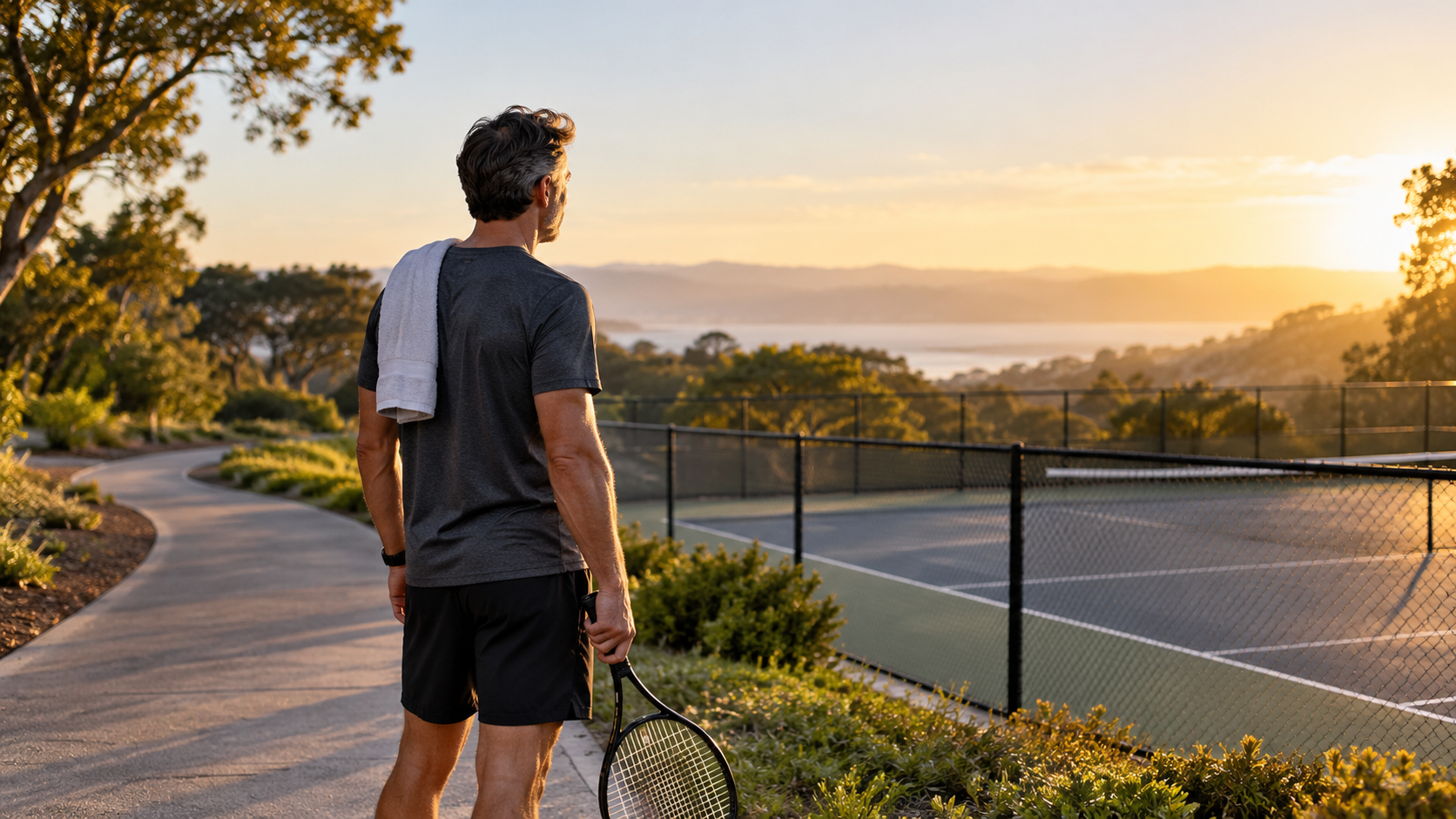
I’m 44 years old, and I still think of myself as an athlete.
I play tennis. I run. I lift weights. I compete. I care about getting better.
But the way I think about performance has changed.
When you’re younger, the goal is often to see how far you can push yourself. Run faster. Lift more. Win more matches. Set personal records.
There is something exciting about finding your limits.
But eventually a different challenge emerges.
How do you keep doing the things you love for the rest of your life?
That question interests me more than almost any performance metric these days.
Because I don't want to be incredibly fit at 44 and broken down at 64.
I want to be playing tennis at 70.
I want to be traveling, walking everywhere, swimming in lakes, carrying my own bags, running if my body allows it, and saying yes when somebody asks if I want to play a game.
I want to remain an athlete for life.
Performance Has a Longer Time Horizon
This changes the way you think about fitness.
The hardest workout isn't automatically the best workout.
More isn't always better.
You don't win by accumulating the most impressive stats on your fitness tracker.
Sometimes the smart decision is pushing hard. Sometimes it's going for an easy run. Sometimes it's doing flexibility work. Sometimes it's taking a day off because your knee doesn't feel quite right.
The objective is no longer maximizing today's performance.
It's maximizing the number of years you get to participate.
That's a very different game.
Health Should Expand Your Life
There has never been more information available about health and longevity.
I find a lot of it fascinating.
I pay attention to nutrition. I exercise regularly. I care about sleep. I take some supplements. I've experimented with plenty of habits intended to improve health and performance.
But there is an obvious trap hidden inside all of this.
You can become so focused on extending your life that you forget to enjoy it.
Suddenly dinner with friends becomes a nutritional calculation. A glass of wine becomes a source of stress. Missing a workout creates anxiety. Vacation becomes an obstacle to your routine.
Health is supposed to give you more life.
It shouldn't become your life.
I want to eat mostly nutritious food and still enjoy a great dinner.
I want to stay fit and still drink good wine.
I want to sleep well and occasionally stay up too late.
I want to care about performance without measuring every minute of my existence.
The point of all these healthy habits is to create a body and mind capable of fully participating in life.
Train for Participation
Maybe that's a better way to think about fitness as we get older.
Train for participation.
Be strong enough to carry things.
Fit enough to explore a city on foot all day.
Mobile enough to get down on the floor and back up again.
Healthy enough to travel.
Athletic enough to play the sports you love.
Energetic enough to say yes to an exciting opportunity that comes your way.
And durable enough to keep doing all of it for decades.
There will always be another metric we could optimize.
But metrics are only useful if they serve something larger.
For me, the larger goal is pretty simple:
I want to keep moving.
I want to keep playing.
I want to keep exploring.
And I want to enjoy the coffee, meals, wine, travel, competition, friendships, and simple pleasures along the way.
Stay in the Game
Youth tends to celebrate peaks.
Your fastest marathon.
Your highest ranking.
Your heaviest lift.
Your best season.
But perhaps the most meaningful athletic achievement is longevity.
Not longevity in the abstract sense of simply accumulating years.
Longevity as continued participation.
Still playing.
Still moving.
Still capable.
There is no finish line for that kind of performance.
And increasingly, I think that's the point.
The goal isn't to win every day.
The goal is to stay in the game.